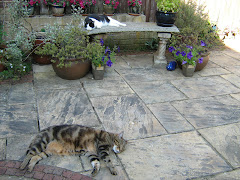
What else would you like to know about my garden or plot? I also welcome constructive feedback, good or bad. I call this version my 'learning garden' as it was my first major design and planting. Who knows how it will look in 2, 5 or 10 years time as I add to my knowledge?
I'm not a gardening expert, just enthusiastic. If I don't know the answer to your question straight away, I'll let you know and get back to you later.
Now don't forget those all important refreshments, nor the plant sales area to complete your visit. And of course there's the Guest Book to sign...
No self respecting open garden would be complete with lots of tea, coffee and cakes. I do hope you've settled down with your own 'cuppa' whilst reading this. Unfortunately my arms won't reach far enough to serve you from here! If you do find yourselves in Chippenham however, rest assured there's plenty of:
Tea - Earl Grey, Keemun, Nilgiri, Yunnan, tea bag builders tea, herbal or fruit teas
Coffee - Fairtrade or Columbian for your cafetiere or Gold Blend instant
Squash - orange, blackcurrant or dandelion & burdock - all no sugar added
Water - our finest cold on tap, courtesy of Wessex Water
Alcoholic beverages are also available for those in attendance at a suitable hour - beer and wine are our main tipples (plus whisky or Bailey's), but we thought we'd pop a few corks off the bottles of Elderflower Champagne to celebrate our gala opening. Zoe gave me the recipe earlier in the year if you're feeling more adventurous next spring and would like to try it, or if you're hedgerow harvesting this autumn, a drop of the old favourite, Elderberry Wine won't go amiss.
What's better than a home-made slice of cake to go with your cup of tea? It's a traditional accompaniment to an Open Garden and many a good visit is won or lost by the standard and range of the cake the hostess (or host of course) has on offer. This garden is no exception and I have a number of family favourites to set before you on a dainty dish fit for a queen. It's a virtual dish, but if you like the look of what you see, the links will take you to my recipe book at the end of this blog.
The best part about my tea time treats is they're totally calorie free and you can have as much as you want! Go on - why stop at one helping when you can have three?
Being a very traditional British household of course we have a cream tea to offer you - Fresh Scones warm from the oven, lashings of clotted cream topped with home made jam. The jam's usually strawberry, but I would like to offer you an alternative today. It's an extremely good year for blackberries and the hedgerows are bursting with them. So I've picked Bramble Jam instead, to give my cream tea a twist.
From the cake stand I have some very tempting treats. Chocolate Cake is many people's favourite. I have one with a very unusual ingredient that gives mine an irresistible flavour and melting texture. The cake is usually iced (frosted for those of you across the pond), but NAH and I have found it so good without it, I've only managed to ice my cakes once. I've given you the full recipe, so you can choose for yourself.
My family has always been a sucker for a good home-made fruit cake. My cousins sigh with relief when they see one posing proudly on the teatime table. So it felt like a homecoming when I first met NAH's parents and found fruit cake was also their family staple. Theirs is called Halifax Building Society Cake .
Note: The prize giveaways part of my open garden shown below is complete. BUT I still have some seeds for you if you'd like some and are prepared to make a donation.
The list of seeds (from my garden or allotment except where stated) available are:
Of course I should be offering you plant sales at this point - a bit tricky. However, as the next best alternative, UK and EU donors will have the possibility of having some seeds saved from mine and Threadspider's gardens here in Chippenham. Patient Gardener has also chipped in with some seeds from her garden in Malvern.
Here's a visual summary of what was available:
A fantastic book stash
From my fabulous blogging buddies - plus a little tapestry something I made earlier
I'll be taking a leaf out of Martyn Cox's Gardening With Kids book and making some packets for the seed giveaway. These wildflower seeds are already nicely wrapped for you
Thanks for reading this far!And a special thank you for your donation. Please do leave a short message (or even a photo) in the Guest Book below. I've some key people to acknowledge, and of course there's my Recipe Book and Veg Plotting archive materials to follow.
Just like any real garden opening, this one couldn't have been opened on time without some valuable extra help. I didn't need assistance with tidying the garden, baking, taking money etc., but I still couldn't have done this without the following help from my fellow blogging buddies:
To EmmaT (Indyblogs, Baklava Shed Coalition and Emsworth Village Show) for reacting so positively when I first thought of the idea and I was wanting to make sure it wasn't just plain daft. She then provided lots of support and encouragement along the way.
To Victoria (Victoria's Backyard) for oodles of advice on what it's like to do a real garden opening, whilst in the throes of getting her own garden ready. If this virtual opening is anything like a real garden visit, then it's down to her. I do hope your garden opening goes well Victoria - and if anyone's near 28 Multon Road, SW18 on the 31st August between 2-6pm, then why not visit her garden (open under the NGS scheme) and see how its done for real?
To Zoe (Garden Hopping) for having the birdsong button on her blog's sidebar, just when I was struggling with the idea of having a birdsong sidetrack available on mine without having to resort to an external link. Not only did she have something that sounds just like the sounds of my garden, she wrote the code for it as well. Zoe also provided the Elderflower Champagne recipe.
To Karen (ArtistsGarden) and Denise (Mrs Nesbitt's Place), two very talented people who were inspired to make something as a donation for fundraising. To Anna, one of my regular commenters, who came up with the very thoughtful donation of a year's subscription to the Cottage Garden Society. Also, to Helen (Patient Gardener) for donating some seeds saved from her garden.
To Easygardener and Yolanda Elisabet (Bliss) for kindly providing the images used for the Glutney and Elderflower champagne recipes respectively.
To WaterAid (link opens in a new window), particularly Victoria Rouse for finding the idea inspiring and donating the WaterAid logo, plus the images and video clip to illustrate their work. See you in London on the 14th at Sing for Water Victoria!
To the authors who've kindly donated signed copies of their books - James Alexander-Sinclair, Martyn Cox (2), Jekka McVicar, Jane Perrone (plus 2 additional books) and Matthew Wilson (2 copies). Also Emma Cooper (Fluffius Muppetus) who donated a lovely bag of cheering wildflower seeds on realising she didn't have a copy of her bookazine available.
Two people have worked especially hard to ensure this site is a success and deserve especial kudos, hugs and kisses:
The Garden Monkey,who's not only providedconstructive feedback on the site as it's developed, but has been instrumental in ensuring lots of top notch donations from his/her contacts. Also a little bit of gentle reminding over blogging priorites and lots of encouragement along the way has been much appreciated :)
Last but not least there's Judith aka Threadspider of Everything in the Garden's Rosy (and not forgetting Threadspider's Weblog), who not only has become a firm friend of mine through blogging, she also lives just up the hill from me and has therefore taken the brunt of the doubts I had on whether the idea would work, bounced ideas back about content, tested things out and generally made sure I've had plenty of light relief away from this blog before I've gone totally square eyed. On top of all of that, she's allowed me to plunder her garden for seeds to give away and photograph; her kitchen and produce were used as models for the Bramble Jam recipe photograph, it's her recipe too and she's donated a lovely prize to help with fundraising. If she'd done any more, then it would be her writing this in response to the help received for her fundraising blog, not me.
Until I left home, we went to my nan and grandad's (dad's parents) for tea every Tuesday. My nan's baking was legendary and she always had her little Bero (brand of baking flour) recipe book to hand. When I bought my house in 1981, it seemed only natural to have my own copy. As you can see they'd been going for a 100 years at the time, so they must have been doing something right.
Traditionally plain scones are served with a cream tea, but my dad always liked a fruit scone with his, so here's both versions. Note the fruit scones are to the definitive R Pete Free Standard - absolutely no mixed peel allowed.
For Plain Scones:
8oz (200g) self-raising flour 0.5 teaspoon (2.5ml) salt 1.5 oz (50g) lard (or margarine if you'd like your scone a little richer) Milk to make a soft dough
For Fruit Scones:
8oz (200g) self-raising flour 0.5 teaspoon (2.5ml) salt 1.5 oz (50g) margarine 1 oz (25g) sugar 2oz (50g) currants, raisins or sultanas 1 egg beaten with enough milk to make 0.25 pint liquid (1 egg + 75ml milk)
Method:
Mix flour and salt, rub in the margarine or lard
Stir in the sugar and fruit if making fruit scones
Add liquid, reserving a little for brushing the tops
Knead lightly on a floured surface and roll out just over 1cm in thickness
Cut into rounds using a fluted cutter, re-roll the trimmings and cut more rounds
Place on a greased baking tray and brush the tops with the remaining liquid
Bake in a hot oven (220 centrigrade, 425 Fahrenheit, Gas mark 7) for about 10 minutes
Makes approximately 10 scones.
Our local garden centre has a 2 for 1 offer on cream teas during August - Yippee!
This cake has a secret ingredient and is absolutely scrummy. Get your friends and family to guess what it is after they've tasted it - mine have always failed, yet it makes sense once you're in the know and can see what it replaces. I've only managed to get as far as icing the cake just once because NAH and I can't wait to eat it! Makes 1 seven inch cake.
Ingredients:
10 ounces (oz) self-raising flour, sifted
8 oz sugar
1.5 teaspoons baking powder
7 oz mayonnaise (not the low fat kind)
4 tablespoons cocoa
8 fluid oz boiling water
1 teaspoon vanilla essence
Icing aka Frosting (optional):
2 teaspoons instant coffee
2 tablespoons cocoa
2 tablespoons hot water
3 oz soft margarine
8 oz icing sugar, sifted
Method:
Mix together the flour sugar, baking powder and mayonnaise
Dissolve the cocoa in the boiling water
Gently stir this into the mixture with the vanilla essence until thoroughly blended
Turn into a greased and lined 7 inch deep, round cake tin
Bake at Mark 4 (180 centrigrade/350 fahrenheit - for fan-assisted ovens the centrigrade equivalent is 160) for 1 to one and a quarter hours.
Cool in the tin before removing
For the icing:
Dissolve the coffee and cocoa in the hot water
Cream together the margarine and icing sugar and beat in the cocoa liquid
I'm now the proud possessor of my mother-in-law's (MIL) cookery book. It wasn't until I opened it that I realised it contains recipes from three generations of NAH's family. Open it and the smell instantly transports me back to the house in Darlington that I've known for 25 years. Sadly we won't be able to go there much longer; NAH is in the process of selling the house as my MIL is now in a care home. However, this recipe takes me back to much happier times and is a family institution. It was taken from the Halifax Building Society Homeowner magazine number 160, Autumn 1982.
Ingredients:
100 grammes (4 ounces) margarine
1 cup sugar (4 ounces)
2 cups mixed dried fruit (8 ounces)
1 cup milk
1 heaped teaspoon black treacle
225 grammes (8 ounces) plain flour
1 level teaspoon mixed spice
0.5 level teaspoon baking powder
0.5 level teaspoon bicarbonate of soda
1 egg, beaten
MIL's notes also has salt (a pinch if wanted) and additional ginger - I suggest 1 level teaspoon for starters, more if you like your cake a bit spicier.
Method:
Melt the margarine, sugar and treacle in the milk in a large pan
Add the dried fruit and bring the mixture to the boil
Simmer for 2-3 minutes and remove from the heat and allow to go almost cold
Turn into a greased and lined oblong 2lb cake tin
Bake at 325 fahrenheit for three quarters of an hour
Cool, turn the cake out of the tin and serve sliced
Unbelievably NAH found one of these in the freezer in Darlington a few weeks ago dated 2001 - we've just enjoyed it immensely. It was probably one of the last cakes my MIL made.
Threadspider gave me this recipe for Bramble Jam (aka Jelly!) and we had a lot of fun recently at her place setting up the above photograph of her bounty from last year. It's sieved, so there's no pips to stick in your teeth. It's a great recipe for using some of your hedgerow harvest combined with any windfall apples you may have from your trees.
To make 3- 5 jars.
Ingredients
1.3kg/3lb blackberries, washed and bits of stalk etc. removed.
2 large cooking apples, washed and diced
450ml/¾ pint water
1 lemon, juice only
Preserving or granulated sugar
2-3 tbsp crème de cassis or other blackberry or blackcurrant liqueur.(Optional but very very nice!)
You will also need:
Muslin, tea towel or jelly bag
Sterilized jam jars and jam pot covers
Method
Prepare a jelly bag or tea towel or muslin by boiling in water for 2-3 minutes. Wring well and leave to cool. Arrange the jelly bag on a stand or up-turned stool or chair with a large bowl beneath, ready for the fruit juice to drip through.
Place the blackberries, apple, water and lemon juice in a preserving or large, heavy based saucepan.
Bring to the boil, then simmer over a low heat for 20-25 minutes or until the fruit is completely soft. I have the muslin simmering in a pan in the background at the same time.
Tip the soft fruit and juice into the jelly bag and leave to drip for 8 hours or until all the juice has been released.
Prepare the jam jars by washing in hot soapy water and leaving to dry and warm in a cool oven - 130C/250F/Gas ½ for 10-15 minutes.
Measure the juice. For every 600ml/1 pint weigh 450g/1lb sugar. Put the juice and sugar back into the clean preserving pan, heat over a low heat until all the sugar has dissolved, add the liqueur, if using. Bring to the boil and simmer for 10-15 minutes or until setting point is reached. Setting point is 112 degrees on a sugar thermometer, if you have one.
Skim away any scum from the top of the jelly and fill the jam jars to the brim. Cover, seal and label. Store in a cool, dark place until required.
VP's notes:
If you don't have a sugar thermometer you can test the setting point in step 6 as follows: Put 2 plates in the refridgerator to cool. After 10-15 minutes, take one of the plates out of the fridge and spoon a little of the jam onto it. If you can wrinkle the surface with a finger after a couple of minutes, setting point has been reached. If not, return the plate to the fridge (in case you have to use it again) and simmer the jam for a few more minutes. Use the second plate for the next testing. And so on until setting point's been reached.
The first combined food growing and cookbook I ever bought was Fork to Fork by Monty and Sarah Don. It was also the first book I bought on Amazon second-hand as it was out of print at the time. I believe an updated version is now available. The book brightened up my train commute to Bristol for quite a while during a bleak and dismal November when I couldn't get to grips with my new allotment. I'd just acquired it (in October 2003) and was dreaming about all the wonderful fresh, seasonal food I would soon be growing. This book fueled my dreams. That first allotment summer I grew an abundance of tomatoes that stayed for weeks after I'd actually composted the plants. Once again I turned to Fork to Fork for inspiration and found this marvellously rich tomato sauce. I use it as a basis for soups and pasta sauce (it can also be used for pizzas), the latter often contains the ever present courgette too!
Ingredients:
5lb (2.25kg) fresh tomatoes (single variety, or mixed according to what's in abundance at the time)
4 cloves garlic, sliced (I often use more, especially if there's been a good crop)
Sea salt
Sugar
Olive oil (I use extra virgin as I love its fruitiness)
Method:
Cut the tomatoes in half and place cut side down in a large roasting tin
Sprinkle with the garlic, sea salt and a little sugar; drizzle with olive oil
Roast in a pre-heated hot oven (gas Mark 8, 230 degrees centigrade, 450 degrees fahrenheit) for 40-60 minutes. Don't worry if the tomatoes start to bubble - this is the water evaporating out of them, which means a much more concentrated flavour
To make the sauce, scrape off every last bit of tomato into a food processor and process until smooth
The sauce will keep for up to a week in the fridge with a little olive oil floated on top, or it can be put in small containers for the freezer (about a quarter of the sauce to 1 container)
Most weekends NAH and I have 'Allotment Soup' ('Assortment Soup' for those of you who don't have an allotment) for lunch. This tends to be whatever is in abundance at the time (seasonal and therefore cheapest if you're buying), so naturally at this time of the year courgettes (zucchini) form a major component. The onions, garlic, and herbs fresh from the garden are constants. I use potato if the soup will need a thickener (for example you won't need potato if you're making a parsnip centric version) and the courgette component will be whatever glut vegetables you have to hand - 1 vegetable or a mixture, it's up to you. Note I don't use salt in my cooking, so you may want to add your own to taste. This quantity will generously serve 4-6.
Ingredients
2lb courgettes or other vegetables of your choice
1 large onion
8oz potato (washed, but not peeled)
2 cloves garlic
1 bunch fresh herbs - type and amount to your taste. I've used sage this time - mixed herbs, thyme, oregano or rosemary also work well, or powdered coriander (cilantro) seed
4 bay leaves
Freshly ground black pepper
1 tablespoon Extra virgin olive oil
2 pints vegetable stock (either home made or a stock cube made up to the amount needed with hot water)
Method
Peel and chop the onion into rough slices
Pour the olive oil into a large pan and set on the stove
Add the onion and set the pan to a medium heat
Peel and chop the garlic and add to the pan
Gently soften the onion and garlic until they are transparent
Add the vegetable stock and freshly ground pepper to taste
Roughly chop the remaining vegetables and add to the pan
Destalk the herbs and add to the pan along with the bay leaves
Bring the pan to a rolling boil, then cover and turn down the heat and simmer for 25 minutes, or until the vegetables are tender. Taste and adjust seasoning about half way through
Allow to cool, then remove the bay leaves with a spoon (you can leave them in if liked - this makes for a spicier version, but you may get the odd fragment of stalk)
Process the soup using a blender until smooth
Reheat and serve with fresh crusty bread
Variation: For courgette gluts, my neighbour makes a delicious courgette and brie soup taken from the New Covent Garden's soup recipe book. And here's the recipe - I've only been able to find a metric version, so you may need to use the measure converter below.
Courgette and Brie Soup (serves 6)
Ingredients
450g courgettes - chopped 350g potatoes - peeled and chopped (I leave the skins on as I prefer them that way) 225g Brie - ripe with rind removed 1 large onion - chopped 1.2 litres vegetable stock (home made, or 1 stock cube made up to the required amount) Seasoning to taste
Method
Put all the vegetables in a large pan, add the stock and seasoning to taste
Bring to the boil, then simmer for 15 minutes or until the vegetables are tender
Cool slightly, then process the soup using a blender until smooth
Add the brie, bring back to near boiling point, stirring constantly so the brie is combined with the liquid
I first came across this recipe in Kitchen Garden magazine a couple of years ago in their version of 'glut buster' recipes. Anyone who can call their chutney 'glutney' has my vote - it turns out to be a great pickle too. Here's the recipe in Hugh's own words.
This lovely pickle is a fantastic way to use various summer veg gluts, and overgrown courgettes are one of my favourites. You can alter the recipe according to what you have, and chop and change the spices to suit your taste, too. Makes about 10 jars.
Ingredients:
1kg courgettes, unpeeled if small, peeled if huge, cut into 1cm dice (or use pumpkin later in the season)
1kg red or green tomatoes, scalded, skinned and roughly chopped (or 1kg plums, stoned and chopped)
1kg cooking or eating apples, peeled and diced
500g onions, peeled and diced
500g sultanas or raisins
500g light brown sugar
750ml white-wine or cider vinegar, made up to 1 litre with water
1 thumb-sized nugget of fresh or dried ginger, roughly chopped
12 cloves
12 black peppercorns
1 (generous) tsp coriander seeds
A few blades of mace
Method:
Put the vegetables and fruit in a large, heavy-based pan with the sultanas or raisins, sugar, vinegar and water, chilli flakes and salt.
Make up the spice bag by tying all the spices in a square of muslin or cotton. Add the spice bag to the pan, pushing it into the middle.
Heat the mixture gently, stirring occasionally to dissolve the sugar, and bring slowly to the boil.
Simmer for 2-3 hours, uncovered, stirring regularly to ensure it does not burn on the bottom of the pan.
The chutney is ready when it is rich, thick and reduced, and parts to reveal the base of the pan when a wooden spoon is dragged through it. If it starts to dry out before this stage is reached, add a little boiling water.
Pot up the chutney while still warm (but not boiling hot) in sterilised jars with plastic-coated screw-top lids (essential to stop the vinegar interacting with the metal).
Leave to mature for at least two weeks - ideally two months - before serving.
The office at my last job had a very good coffee bar with an afternoon coffee and cake offer that was extremely bad for the waistline, but such a bargain it was hard to resist - Americano and a large slice of cake for 99p. A different cake was baked on the premises each day and their version of courgette cake was one of my favourites.
Ingredients:
For the cake: 250g butter, broken up into pieces (at room temperature) 450g (1 cup) caster sugar or brown sugar 4 eggs 350g (3 cups) self raising flour juice and zest of 1 lemon 1 tsp cinnamon 1/2 tsp mixed spice 350g (3 cups) courgette (zucchini), grated 50g (1/2 cup) walnuts, roughly chopped 80g (1/2 cup) sultanas (optional)
Lemon Cream Cheese Icing: 125g cream cheese 50g unsalted butter 300g icing sugar juice and zest of 1/2 lemon
Method:
Courgette Cake:
Grease and line 2 x 8inch (20cm) cake tins with baking paper
Preheat an oven to 180°C
Place the butter and sugar in a bowl and beat until creamy
Add the eggs one at a time while mixing until the eggs are well incorporated
Sieve the flour with the cinnamon and mixed spice
Fold in a 1/3 of the flour, followed by 1/2 of the lemon juice and zest, repeat this using the remaining flour and lemon, so that all the ingredients are well combined
Stir in the courgette, walnuts and sultanas (if using) and incorporate well
Pour the mixture into the prepared cake tins and place on the centre shelf of the preheated oven
Leave the cakes to cook for around 30-40 minutes or until the cake is firm to touch
Turn the cakes out on a rack and allow to cool
Lemon Cream Cheese Icing:
Beat the cream cheese and butter together until creamy
Gradually beat in the icing sugar and lemon juice and zest until you have a smooth creamy icing
Spread half the icing over the top of the one cake and sandwich the two cakes together
Cover the top of the cake with the remaining icing
Variation: Zest and juice of oranges or limes can be used instead of the lemon
This recipe is taken from The Bread Book by Sara Lewis and is another cunning way of using up some of that courgette glut. To keep things (relatively) short, I'll just post the bread machine recipe. Do post me a comment if you'd like the hand-made version.
Ingredients
150g (5oz, heaping half cup) courgette - grated & patted dry with kitchen paper
500g (1lb, 4.5 cups) strong white flour
1 lemon, grated rind only
1 tablespoon fresh chopped French tarragon (don't bother with Russian unless you really don't like the aniseed flavour)
1 teaspoon caster sugar
2 teaspoons salt
freshly ground black pepper
1.5 teaspoons fast-action dried yeast
2 tablespoons olive oil
200ml (7 fl oz, scant 1 cup water)
Method
Assemble ingredients.
Lift the tin out of the breadmaker, fit the kneader blade and then add the ingredients in the order advised by your breadmachine's manufacturer
Insert the tin into the breadmachine and shut the lid. Select basic large (750g/1.5lb) white bake and select the preferred crust setting if your machine has this option. (I used the dark crust setting for the loaf you see in the photo) Press start.
At the end of the programme, lift the tin out of the machine with oven gloves and turn the bread out onto a wire rack to cool. Loosen the bread with a plastic spatula if it's reluctant to leave the tin.
If you don't have a crust setting option and you find the loaf is rather pale on top, brush a little butter over the top and brown under the grill.
Makes 1 large loaf. Delicious with tuna or soup, such as my Allotment Soup
Variations I find it very hard to keep to a recipe, so here are some variations I've tried:
Substitute the same amount of peeled butternut squash for the courgette. This is a good way of using those teeny tiny squashes we get from time to time
Fennel foliage (bulb or herb) instead of tarragon for a stronger aniseed taste
Use 30-40ml juice from your grated lemon and make up to the 200ml liquid needed with water. Tip - microwave the lemon for 10 seconds and you'll extract the juice much more easily
Substitute strong wholemeal flour for the white flour to make an even healthier bread. However, you'll lose some of the green speckled effect from the courgette and tarragon. Also, remember to change the baking option to brown bread!
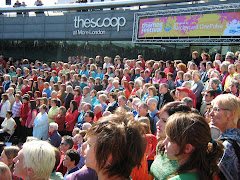
1. Join new choir (Wiltshire Water Wailers, 75 singers) 2. Learn 7 new songs in 5 weeks - in English, Portuguese, Croatian & South African 3. Perform a fundraising concert in week 6 (8th July, Trowbridge, 300 attendees + radio recording) 4. Join a 1000 strong Sing for Water choir in London 5. Perform at the Thames Festival on 14th September 6. Raise some more cash!!!!!
Here I am - that tiny dot in there, see? I usually write about gardening, veg or Wiltshire, but really it's about anything which occurs to me up at the plot.


 Our local garden centre has a 2 for 1 offer on cream teas during August - Yippee!




.jpg)